
Lights, Camera, Conversation: Crafting Compelling Interview Videos

Why Interview Video Production Transforms Your Brand Story

Interview video production is the process of creating compelling video content that captures authentic conversations and testimonials to build trust, humanize your brand, and drive measurable marketing results. Successful interview video production involves three core stages:
Pre-Production Planning: Defining your purpose, crafting strategic questions, preparing subjects, and scouting locations.
Production Execution: Using professional equipment (cameras, lighting, audio) and directing authentic on-camera performances.
Post-Production Polish: Editing footage, improving audio and visuals, adding graphics, and optimizing for distribution.
The numbers tell a powerful story: according to industry research, client testimonial videos have an effectiveness rating of nearly 89%, making them one of the most effective forms of content marketing. Why? Because nothing beats the authenticity of a real person sharing their genuine experience.
Unlike a news interview seeking controversy, a brand interview aims to create an asset that lets potential customers see the real people behind your company—their passion, expertise, and humanity.
The challenge is that effective interview videos require more than just a camera. They demand strategic planning, technical expertise, and the skill to make subjects comfortable enough to be authentic. Details like crystal-clear audio are critical, as viewers will forgive shaky video but not bad sound. Knowing how to ask follow-up questions that elicit emotional depth is just as important.
Whether capturing customer testimonials, interviewing leadership, or producing documentary-style content, the principles are the same: plan carefully, execute professionally, and polish relentlessly.
The Blueprint: Pre-Production and Planning
Great interview videos are won or lost in pre-production, long before the cameras roll. This is where you map out your strategy, craft questions, and create an environment for authentic stories to unfold.
Just as you wouldn't build a house without a blueprint, every decision in the planning phase of interview video production affects the final impact. This groundwork separates videos that connect from those that fall flat.

At Gener8 Media, our pre-production process focuses on defining your purpose, scripting questions for genuine responses, preparing subjects to be confident, and scouting locations that improve your message. Every choice is about brand alignment and minimizing distractions, ensuring the final video looks, sounds, and feels like you. Want to see how this planning mindset extends to broader campaigns? Check out our approach to Digital Marketing Campaigns.
Defining Your "Why": Strategy and Goals
Before any other step, you must define why you are making this video. Are you building trust with testimonials, attracting talent, or educating customers? Each goal requires a different approach. Your core message and target audience guide every decision.
We work with you to determine what you want to say and who needs to hear it. This includes establishing the desired tone—whether corporate and polished or casual and conversational—and defining how you will measure success. From day one, aligning with your brand identity is key to ensuring consistency across all visual content.
Crafting the Conversation: Question Development
The questions you ask can make or break an interview. We focus on open-ended questions that invite storytelling. Questions starting with "what" and "how" are best. For example, instead of "Did you enjoy working with us?" ask, "What was your experience like working with our team?" The first gets a one-word answer; the second opens the door to a story.
To encourage genuine reactions over rehearsed speeches, we typically don't provide the exact questions beforehand. This allows for the natural pauses and authentic emotion that come from a real conversation. However, pre-interview research is essential. It allows us to ask informed follow-up questions that dig deeper, creating a balance between preparation and flexibility.
For more insights on our interview approach, explore our Video Interview Production Tips.
Setting the Scene: Location and Subject Preparation
A comfortable interviewee is an authentic one. We build rapport before filming by chatting, explaining the process, and reassuring subjects that mistakes are fine—that's what editing is for. This helps them relax and be themselves.
The interview background tells its own story. We seek controlled environments with minimal distractions, good acoustics, and appropriate lighting. The location should visually reinforce your narrative, not detract from it. Lighting is crucial for setting the mood and ensuring a professional look.
We also provide wardrobe advice, suggesting solid colors and avoiding busy patterns that can be distracting on camera. Arriving early allows us to set up and connect with the interviewee before the pressure of recording begins. By the time we hit record, they are more comfortable, and the real stories emerge.
Rolling Sound: The Art of High-Quality Interview Video Production
The production phase is where careful planning transforms into tangible results. This is where technical precision meets human connection, and we capture the authentic moments that make viewers pay attention.

During production, interview video production shifts from theory to practice. Every technical choice, from cameras and microphones to lighting, serves one purpose: helping your subject tell their story compellingly. We also capture B-roll footage—supporting visuals that add depth and keep viewers engaged. To see how we bring these elements together, check out Our Approach to Video Interview Production.
The Essential Tech Toolkit
While audiences may forgive visual imperfections, bad audio is a deal-breaker. That's why we prioritize sound quality above all else.
Audio Equipment: We use lavalier (clip-on) mics for clear voice capture and shotgun mics as a high-quality backup. We constantly monitor audio levels to ensure perfection.
Camera Choice: We use 4K and HD cinema cameras. The high resolution of 4K provides flexibility in post-production to reframe or stabilize shots without losing quality.
Lighting: A standard three-point lighting setup (key, fill, and back lights) ensures subjects look their best and separates them from the background, creating a professional, polished look.
Stabilization: Tripods and stabilizers are non-negotiable for eliminating shaky footage. Gimbals and sliders provide smooth, cinematic motion for B-roll.
Multi-Camera Setups: Using two or more cameras allows us to seamlessly switch angles in post-production. This hides edits, removes awkward pauses, and maintains the conversation's emotional flow.
Directing Authenticity: On-Camera Techniques
The best interviews feel less like an interview and more like a genuine conversation. The interviewer's role is crucial. We practice active listening, asking spontaneous follow-up questions to dig deeper into the story. These unscripted moments often yield the most authentic sound bites.
We reassure subjects that retakes are fine, which helps them relax and speak naturally. The interviewer's non-verbal cues, like nodding and maintaining eye contact, encourage the speaker without interrupting. The goal is to create a safe environment where people feel comfortable sharing their honest experiences.
Mastering Different Interview Styles
The format should serve your message. Different styles of interview video production achieve different goals:
Talking Head: A classic style focusing on one speaker, perfect for expert insights or testimonials.
Conversational: Features a visible host, creating a dynamic back-and-forth that builds rapport.
Remote: An efficient way to capture high-quality footage from subjects anywhere in the world.
Documentary-Style: Weaves interviews into a larger narrative with other visual elements.
Man-on-the-Street: Captures spontaneous public reactions for a raw, relatable feel.
Choosing the right style depends on your specific objectives. A simple talking head can be powerful, while a multi-person format can bring a complex story to life.
The Final Polish: Post-Production and Editing
After filming, post-production is where the real storytelling magic happens. In this phase, we transform hours of raw footage into a polished, compelling narrative that connects with your audience.

Post-production is like sculpting: we assemble the best footage, improve visuals, refine audio, and add graphics to create a seamless viewing experience. This is also where we strategically repurpose content to maximize your investment. To see how we bring these elements together, Explore our Professional Video Services.
Assembling the Story: Editing for Engagement
Great editing is invisible; the audience should be drawn into the story, not notice the cuts. We build a narrative structure that keeps viewers engaged by identifying the strongest, most authentic moments from the interview.
B-roll footage is crucial for adding visual context and breaking up long talking segments. It illustrates what the subject is discussing and keeps the video dynamic.
When using multiple camera angles, we can seamlessly remove stumbles or less impactful moments without jarring jump cuts, distilling hours of conversation into the most compelling minutes. Pacing and rhythm are carefully managed to maintain viewer interest.
Enhancing the Impact: Audio, Color, and Graphics
Even perfect footage benefits from refinement. This is where technical expertise meets artistic vision.
Audio Mixing: We clean up audio, remove background noise, and balance levels to ensure every word is crystal clear. Poor audio is a primary reason viewers abandon a video.
Color Correction and Grading: Color correction ensures natural skin tones and consistent lighting. Color grading goes further, using color to evoke specific emotions and align the visual mood with your brand identity.
Graphics and Text: Professionally designed lower thirds, titles, and graphics identify speakers and highlight key points. We use your brand's fonts and colors to reinforce your identity.
Subtitles and Captions: Essential for accessibility and for viewers who watch with the sound off (common on social media), captions boost engagement and comprehension.
Exploring the Future of Interview Video Production
The world of interview video production is constantly evolving. At Gener8 Media Inc., we leverage cutting-edge technology to shape its future.
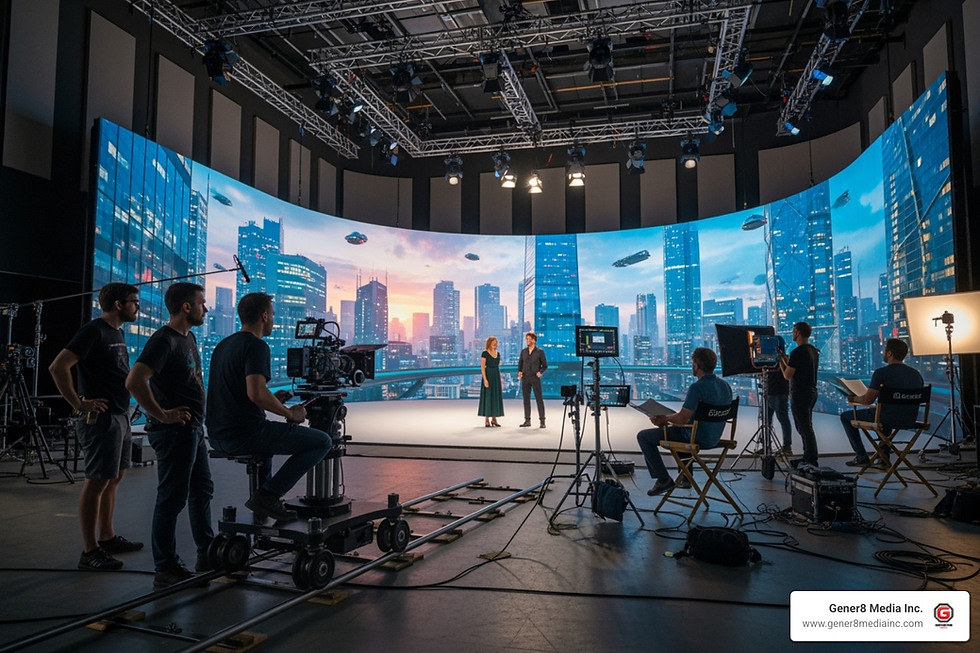
Our expertise in virtual production and 3D animation allows us to create dynamic, animated backgrounds or integrated 3D visuals that make interviews unforgettable. We are also refining advanced remote production techniques to make remote interviews look and feel as professional as in-studio shoots.
Smart content repurposing is key to maximizing value. We specialize in turning a single interview into ten or more short clips for social media, email, and ads. This strategy provides months of content from one production day. Based in Northern California, we use technology to create visual stories that captivate and inspire. Find more about Creative Journeys in Video Production and see how we're pushing boundaries.
Frequently Asked Questions about Interview Video Production
How do you make someone feel comfortable during a video interview?
A relaxed interviewee is an authentic one, which is the key to powerful interview video production. We make subjects comfortable by:
Building rapport before filming with casual conversation.
Explaining the process clearly so they know what to expect.
Creating a comfortable setting with water and minimal distractions.
Using a warm, conversational tone—not a formal interrogation.
Reassuring them that mistakes are fine and can be easily removed in editing. This simple statement gives them permission to relax and be themselves.
What is the most important piece of equipment for a video interview?
While cameras and lighting are important, high-quality audio is absolutely paramount. Viewers will forgive minor visual flaws, but they will not tolerate poor sound. Muffled, noisy, or inconsistent audio will cause them to click away immediately.
For this reason, we prioritize professional sound equipment, such as lavalier (clip-on) and shotgun microphones. Investing in clear audio is critical to ensuring your message is heard and your video is perceived as professional. In interview video production, if your audience can't hear the story, they can't connect with it.
How long should an interview video be?
The ideal length depends on the platform and purpose:
Social Media (Instagram, LinkedIn): Aim for 1-2 minutes. These short, punchy segments are designed to capture attention quickly.
Website (Testimonials, Brand Videos): A 3-5 minute video provides enough time to tell a compelling story without losing viewer engagement.
Long-Form (Documentaries, Case Studies): These can be 10-15 minutes or longer, but they require a strong narrative arc to hold attention.
Our strategy often involves creating a longer "hero" video and multiple shorter clips from a single session. This maximizes your content's reach and value across different platforms.
Conclusion: From Conversation to Conversion
Powerful interview videos are not accidental; they are the result of a deliberate process. From strategic pre-production and precise on-camera execution to the creative polish of editing, every step is designed to transform an authentic conversation into a compelling story that moves people to act.
The power of interview video production lies in its authenticity. In a world of polished marketing, a genuine human story—from a customer, employee, or expert—builds trust in a way that traditional advertising cannot. These moments create an emotional connection and drive real business results.
This guide has covered the essentials: asking the right questions, ensuring subject comfort, capturing crystal-clear audio, and editing with purpose. We've also explored how to choose the right interview style and how new technologies are expanding creative possibilities.
At Gener8 Media Inc., we combine storytelling expertise with cutting-edge technology like virtual production and 3D animation. Based in Northern California, we specialize in turning your vision into immersive content that connects with viewers on an emotional level. Your brand has stories worth telling, and we know how to capture them in a way that does them justice.
Ready to harness the power of authentic stories and transform conversations into conversions? Learn more about our Documentary Production Company and let's start crafting your story together.


Comments