
Behind the Scenes: Nailing Your Documentary's Pre-Production

Why Documentary Pre-Production Sets the Foundation for Success

Documentary pre production is the critical planning phase that transforms your story idea into a concrete roadmap for filming. This stage involves research, scriptwriting, budgeting, crew assembly, location scouting, and securing interviews before cameras start rolling.
The three essential stages of documentary filmmaking are:
Pre-Production - Planning, research, and preparation
Production - Filming interviews, b-roll, and gathering footage
Post-Production - Editing, sound design, and final delivery
According to industry research, approximately 70% of a film's success can be attributed to effective pre-production planning. This statistic underscores why seasoned filmmakers spend significant time in this phase - it's where potential problems get solved before they become costly mistakes on set.
Documentary pre-production differs from narrative filmmaking because you're working with real people, unpredictable situations, and stories that evolve during the process. You can't simply write a script and follow it exactly. Instead, you need flexible planning that accounts for the unscripted nature of documentary work.
The planning phase typically consumes 20-30% of a documentary's total budget and can span from weeks to months depending on project complexity. During this time, filmmakers conduct deep research, develop relationships with subjects, secure legal permissions, and create the logistical framework that supports the entire production.
As filmmaker Errol Morris noted about the filmmaking process: most of what happens is invisible, like an iceberg where only a small portion appears above water. Pre-production represents that massive, hidden foundation that supports everything audiences eventually see on screen.

The Foundation: Finding and Researching Your Story
Every powerful documentary starts with a story that matters—not just to audiences, but to you as a filmmaker. The best documentary ideas come from genuine passion and personal connection. When you care deeply about your subject, that authenticity shines through every frame and sustains you through the long journey from concept to completion.

Finding compelling documentary ideas often begins with looking inward. Ask yourself: What issues keep you up at night? Who are the people you admire most? What stories exist right in your own community? The most accessible subjects are often the most overlooked, and your unique perspective on familiar topics can reveal extraordinary stories hiding in plain sight.
Once you've identified a potential story, in-depth research becomes the backbone of your documentary pre production. This isn't just fact-gathering—it's detective work that uncovers the layers, contradictions, and human truths that transform good ideas into great films.
Your research toolkit should include archival footage, public records, newspaper archives, and academic sources. Think of it as a treasure hunt where each findy adds depth to your understanding. If you were documenting a local environmental issue, for example, you wouldn't just interview current activists. You'd dig into historical records, examine past coverage, and understand how the story fits into larger cultural and political contexts.
During this research phase, you're also identifying key themes and defining your unique angle. What makes your approach different from other films on similar topics? How will your background, perspective, or access create a story that hasn't been told before? This is where your passion project becomes a compelling narrative that others will want to support and watch.
Understanding your target audience from day one shapes every decision you make. Are you creating an educational piece for students, an advocacy film for activists, or a character-driven story for mainstream audiences? Knowing who you're speaking to helps determine your tone, structure, and even distribution strategy.
You can explore more info about our past Films to see how different approaches to research and storytelling create unique documentary experiences.
Developing Your Core Concept and Pitch
Once your research starts revealing the heart of your story, it's time to distill that vision into clear, compelling pitches. This is where your passion meets the practical reality of filmmaking—you need to convince others to believe in your project too.
Your elevator pitch is your secret weapon. Picture this: you're in a coffee shop and overhear someone saying they fund documentaries. Can you explain your entire film in two sentences that make them forget their latte? This pitch should capture who your story is about, what's at stake, and why it matters right now.
The logline takes this further—one powerful sentence that encapsulates your documentary's essence. Think of it as the DNA of your film, containing everything essential in its most concentrated form.
A documentary treatment expands your vision into a detailed roadmap, typically running 5-15 pages. This document becomes your north star, outlining not just what you'll film, but how you'll approach the story visually and thematically. It's essential if you plan to seek funding or partnerships.
Your documentary proposal adds the business side to your creative vision. This includes budget estimates, production timelines, and team credentials—everything a potential funder or collaborator needs to understand both your artistic vision and professional capability.
Creating a sizzle reel can be your most powerful tool for bringing abstract concepts to life. Even in pre-production, you can combine existing footage, photos, music, and brief interviews to create a compelling preview. This visual pitch often communicates your vision more effectively than any written document.
The key to crafting strong proposals and pitch decks is balancing creative passion with professional presentation. Your unique story deserves the best possible chance to find its audience, and that starts with how you present it to the people who can help make it happen.
Crafting the Blueprint: Script, Storyboard, and Shot List
Now that we have a solid concept and compelling pitch, it's time to translate our vision into a detailed roadmap. This stage of documentary pre production involves creating the blueprint that will guide our storytelling, even when working with the unpredictable nature of real life.
Documentary Scriptwriting for the Unscripted
Here's where documentary filmmaking gets interesting - we need to write a script for something that hasn't happened yet. It sounds impossible, but it's actually one of the most valuable exercises in documentary pre production.
Unlike narrative films where every word is predetermined, documentaries live and breathe with real life. We can't script what our interview subjects will say or predict exactly how events will unfold. But that doesn't mean we skip the scripting process entirely.
Instead, we create what we like to call a "living script" - a flexible document that helps us organize our thoughts and visualize potential scenes. Think of it as building a house with moveable walls. We establish the foundation and framework, knowing we'll adjust the details as our story reveals itself.
Our approach focuses on narrative structure that can adapt to reality. We identify potential turning points, moments of conflict, and emotional peaks that might emerge. We consider character arcs for our subjects - what journeys might they take throughout the film? What internal struggles could surface?
Most importantly, we plan for visual storytelling. How can we use camera angles, lighting, and composition to convey emotion without relying entirely on talking heads? This is where documentaries truly shine - when the visuals become part of the story itself.
The beauty of documentary scriptwriting lies in its flexibility. We're not locked into rigid dialogue, but we're not wandering aimlessly either. We have a compass that points us toward our story's heart.
Key Components of Documentary Pre-Production
Creating our documentary blueprint requires several essential tools, each serving a unique purpose in the planning process.
The two-column script format becomes our best friend during this phase. The left column outlines all our visual elements - A-roll interviews, B-roll footage, archival photos, and graphics. The right column details the audio landscape - interview segments, music cues, narration, and sound effects. This format lets us plan both the visual and auditory experience, even before we know exactly what our subjects will say.
What makes this approach particularly powerful is how it evolves with our project. We start with our best guesses and research-based predictions, then constantly update the script as we capture real footage and interviews. It becomes a living document that grows with our story.
Storyboarding for documentaries presents unique challenges. We can't draw exact scenes that haven't happened yet, so we focus on mood, composition, and visual themes. We might sketch the feeling we want to capture in an interview setting or the atmosphere we're hoping to find at a location.
Mood boards help us define the visual and emotional tone before we start filming. We collect images, color palettes, and visual references that capture the essence of our story. These become invaluable references for our cinematographer and help maintain visual consistency.
Our shot lists require collaboration between the director, assistant director, and director of photography. We plan for different scenarios - what shots do we absolutely need? What would be nice to have? What backup options exist if our primary plan falls through?
Pre-planning sheets and templates keep everything organized and ensure our entire team stays aligned. These documents outline production roles, responsibilities, and logistics, creating a shared understanding of how each shoot day will unfold.
The key to successful documentary pre-production planning is balancing structure with flexibility. We plan thoroughly enough to use our time efficiently, but we stay adaptable enough to capture the unexpected moments that often become the heart of our films.
The Core of Documentary Pre Production: Assembling Your Plan
With our story and visual blueprint in hand, we dive into the logistical heavy lifting of documentary pre production. This is where we assemble all the practical elements needed to bring our film to life.

Budgeting and Scheduling
Managing your budget effectively during documentary pre production can make or break your entire project. Statistic we mentioned earlier? You'll typically spend 20-30% of your total documentary budget during this crucial planning phase.
The average documentary budget varies wildly - from $1,000 for a compelling short film to over $1 million for a feature-length production. That's quite a range! But here's what we've learned: underestimating costs is one of the biggest reasons productions fail.
Your pre-production budget needs to cover several essential areas. Research costs include accessing archival materials, consulting with experts, and preliminary travel for early interviews. Travel and accommodation expenses add up quickly when you're scouting locations and meeting potential subjects. Don't forget about legal fees for contracts, permits, release forms, and copyright clearances.
Gear rental might seem premature, but testing equipment and conducting pre-visualization shoots can save you headaches later. You'll also need to budget for personnel salaries during pre-production - your key producers, researchers, and writers need to eat while they're working their magic. If you're establishing a temporary production hub, factor in office setup costs too.
Here's a pro tip from our experience: always allocate at least 10% of your budget as a contingency fund. Trust us, unexpected expenses will pop up, and you'll be grateful for that safety net.
Creating your production calendar goes hand-in-hand with budgeting. We map out expected shooting dates, set realistic deadlines for pre-production tasks, and plan detailed itineraries. The goal is creating accurate schedules that account for the unpredictable nature of documentary work. Problem-solving ahead of time beats scrambling on set every single time.
For help structuring your financial plan, a comprehensive budget template can be invaluable in keeping everything organized and realistic.
We invite you to learn more about our comprehensive Documentary Production services.
Building Your Team and Scouting Locations
Collaboration truly forms the cornerstone of successful filmmaking. We believe in surrounding ourselves with people who are better than us - it's honestly the best way to grow as filmmakers and create something extraordinary.
Hiring your key crew members early in the pre-production process makes everything else smoother. Your Director shapes the creative vision, your Producer handles the logistical complexities, and your Director of Photography brings the visual storytelling to life. These aren't just job titles - they're your creative partners who'll help transform your vision into reality.
Location scouting deserves special attention because it's about so much more than finding pretty backgrounds. We've learned some hard lessons about this over the years. You need to assess the practical realities of each location, not just how it looks through your camera.
Light changes everything about your shots, so observe natural light patterns at different times of day. That gorgeous golden hour might only last twenty minutes, while harsh midday sun could create unflattering shadows on your subjects.
Sound considerations are absolutely critical, and here's something we can't stress enough: you must listen to locations at different times of day. Seriously, this step will save your production! That peaceful park might be next to a construction site that starts jackhammering at 7 AM. Beaches look stunning but often create dialogue nightmares due to constant ocean sounds - they're much better for contemplative, non-dialogue scenes.
Permits need to be secured well in advance. Nothing kills momentum like showing up to shoot and being turned away by security or local authorities. Research the requirements early and build permit processing time into your schedule.
Logistics matter more than you might think. Consider access routes for your crew and equipment, available power sources, parking situations, and how each location impacts your shooting schedule. We always bring key department heads to tech scouts so they can assess angles, lighting conditions, sound challenges, and logistical needs from their expertise.
The human element of building relationships with your subjects and locations often determines whether your documentary succeeds or struggles. Take time during pre-production to nurture these connections - they'll pay dividends throughout your entire production process.
The Human Element: Interviews and Legal Essentials
At its heart, documentary filmmaking is about real people sharing their stories. This human connection makes documentary pre production both rewarding and complex. We're not just planning shots and schedules - we're building relationships and navigating the legal framework that protects everyone involved.

The trust between filmmaker and subject forms the foundation of authentic storytelling. Without it, interviews feel stiff and subjects hold back their most compelling insights. Building this trust starts long before cameras roll - it begins with how we approach potential interviewees and continues through every interaction.
Managing Interviews and Securing Rights
Reaching out to potential interview subjects requires a delicate balance of professionalism and genuine connection. We've learned that crafting a professional and concise official invitation makes all the difference. Our approach focuses on clearly explaining who we are, what the project involves, and exactly what we're asking from our subject.
The key is keeping it simple and honest. Don't overload people with information or make grand promises about the film's impact. Instead, be transparent about the time commitment, the topics you'll cover, and how their story fits into the larger narrative.
Sending interview questions in advance has become one of our most valuable practices. While some filmmakers worry this makes interviews feel rehearsed, we've found the opposite to be true. When subjects have time to think about their responses, they often share deeper, more thoughtful insights. It also shows respect for their time and helps anxious interviewees feel more comfortable.
For example, when we interviewed theologian J.I. Packer for a project, we provided detailed questions weeks before filming. See questions for J.I. Packer here. This preparation allowed him to reflect on complex topics and share stories he might not have remembered spontaneously.
Building genuine trust remains the most crucial element of securing great interviews. This means following through on commitments, being honest about sensitive topics, and treating subjects as collaborators rather than just sources of content. Trust can't be rushed, which is why we start relationship-building early in pre-production.
Here's what works versus what doesn't when requesting interviews:
Best Practices | Common Mistakes |
Professional, concise invitation | Vague, informal, or overly long request |
Send interview questions in advance | Surprise subjects with questions on the spot |
Clearly explain project and desired involvement | Assume subject understands documentary process |
Build rapport and trust before filming | Rush into filming without establishing connection |
Be transparent about potential topics | Introduce sensitive topics unexpectedly |
Legal Documents and Rights Clearances
The legal side of documentary filmmaking might not be glamorous, but it's absolutely essential. Skipping these steps during documentary pre production can create expensive headaches later - or even prevent your film from being distributed.
Interview release forms are non-negotiable. Before any camera starts rolling, every person being interviewed must sign a release form. This document grants permission to use their likeness, voice, and interview content in your film. It protects both you and your subjects by clearly establishing what they're agreeing to participate in.
Appearance releases work similarly but cover anyone who appears on camera, even if they're not formally interviewed. That person walking by in the background of your street scene? They need a release too if they're identifiable in the final film.
Location releases become necessary when filming on private property. Even if the property owner invited you to film, having written permission protects everyone involved. Public spaces typically don't require releases, but it's worth checking local regulations.
Archival footage rights can be one of the most complex and expensive aspects of documentary production. Using existing footage, photographs, or audio from news archives, stock footage companies, or other sources requires proper licensing. The costs can add up quickly, so research these expenses early in your budgeting process.
Music licensing deserves special attention because it can take months to secure rights. Whether you're using popular songs, classical pieces, or even some "royalty-free" music, understanding the licensing requirements is crucial. Starting this process early prevents last-minute scrambles that could delay your film's completion.
For comprehensive guidance on navigating these legal requirements, we recommend exploring Legal Forms & Contracts resources that can help ensure you're properly protected throughout the filmmaking process.
Advanced and Adaptive Planning
Documentary pre production isn't a one-size-fits-all process. Every documentary has its own personality, and the planning needs to match. At Gener8 Media Inc., we've learned that collaboration and adaptability are the secret ingredients that turn good ideas into great films.
Adapting Your Documentary Pre-Production for Different Styles
Think of documentary styles like different dance forms - each requires its own rhythm and preparation. Run-and-gun documentaries are like freestyle dancing. You can't choreograph every move, but you need to know the music inside and out. Our pre-production for these projects focuses on extreme flexibility. Instead of detailed shot lists, we identify key access points and potential story beats. We prepare our team for quick decisions and unexpected moments. The magic happens when you're ready for anything.
Observational documentaries require a completely different approach. These films are like being a fly on the wall - you want to capture life as it naturally unfolds. Pre-production here is all about patience and trust-building. We spend considerable time just being present with our subjects, understanding their world without interfering. It's less about planning shots and more about earning the right to witness authentic moments.
Historical documentaries flip the script entirely. These projects are research marathons. We dive deep into archives, hunt down experts, and carefully map out how historical footage and photographs will bring past events to life. Every visual element needs to be authenticated and cleared well before filming begins.
Participatory documentaries put the subjects in the driver's seat. Here, pre-production becomes a collaborative workshop. We establish frameworks that empower our subjects to help tell their own stories. It's about sharing creative control and ensuring authentic voices guide the narrative from day one.
Innovations in Pre-Production Planning
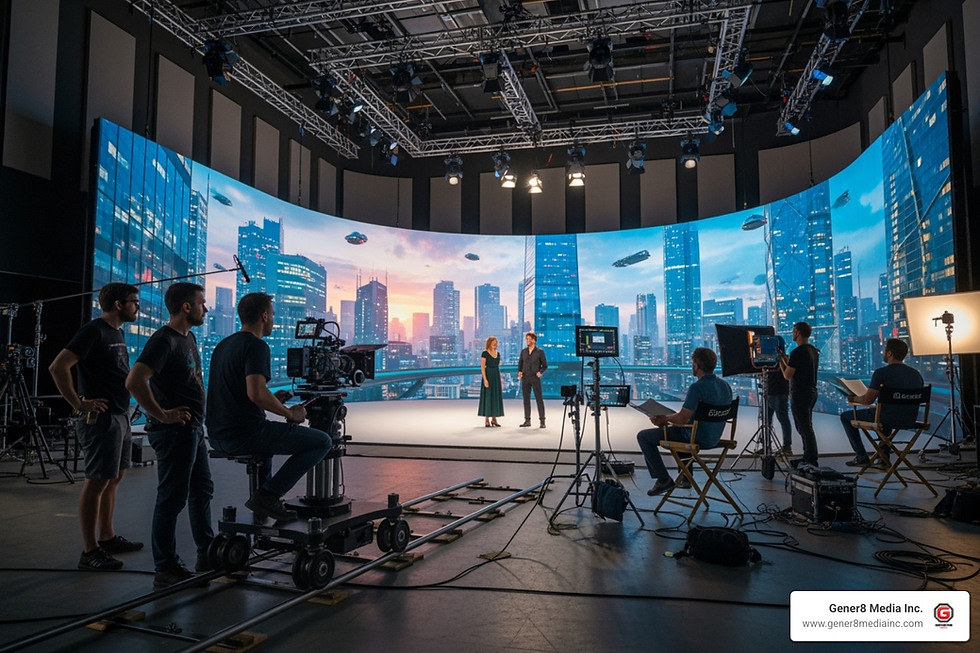
At Gener8 Media Inc., we're not just keeping up with technology - we're using it to solve age-old documentary challenges. Virtual production and 3D animation might sound like tools for big-budget sci-fi movies, but they're revolutionizing how we approach documentary pre production.
When we need to recreate historical events or explain complex scientific processes, virtual production lets us pre-visualize scenes that would be impossible to plan traditionally. We can map out camera movements, test lighting scenarios, and even block out character positions in virtual environments. This means when we arrive on location, we're not figuring things out - we're executing a well-tested plan.
3D animation integration opens up storytelling possibilities when archival footage is scarce or concepts are too abstract for traditional filming. During pre-production, we plan exactly how these animated sequences will blend with live-action footage, creating seamless narratives that improve rather than distract from the story.
This advanced planning approach ensures we build a strong foundation for every project. We believe in solving problems during pre-production, not scrambling to fix them on set. This philosophy allows us to transform diverse visions into immersive experiences, making the actual production phase smoother and more successful.
Our expertise in leveraging cutting-edge technology while maintaining the authentic heart of documentary storytelling sets us apart. When you're ready to bring your vision to life with this level of preparation and innovation, explore our comprehensive Documentary Film Production Company services to see how we can help turn your idea into reality.
Conclusion
Documentary pre production transforms your passionate idea into something real and actionable. Think of it as the invisible foundation that supports everything your audience will eventually see on screen. Without this crucial groundwork, even the most compelling stories can crumble under the weight of poor planning.
Throughout this journey, we've walked through every essential step together. We started with finding and researching your story - that initial spark where passion meets purpose. Then we moved into crafting your blueprint through scripts, storyboards, and shot lists that guide your vision. We explored the practical side of assembling your plan, from budgeting wisely to building the right team and scouting locations that serve your story.
The human element brought us face-to-face with the delicate art of securing interviews and navigating legal requirements. These aren't just administrative tasks - they're the bridge between your subjects' trust and your film's integrity. Finally, we finded how advanced planning techniques can adapt to different documentary styles while leveraging innovative technology.
Statistic we shared at the beginning? Approximately 70% of a film's success comes from effective pre-production planning. This isn't just industry wisdom - it's a promise that your time invested now will pay dividends throughout production and beyond. Every hour spent researching, every conversation with potential subjects, every legal document properly filed is an investment in your film's future success.
The beauty of meticulous preparation lies not just in preventing problems, but in empowering your storytelling. When you've done the groundwork, you're free to focus on what matters most - capturing authentic moments and crafting a narrative that truly resonates with audiences. You're prepared for the unpredictable nature of documentary work while maintaining the flexibility to adapt as your story evolves.
Ready to bring your vision to life? Your story deserves the solid foundation that thoughtful pre-production provides. Whether you're tackling your first documentary or your tenth, having experienced partners can make all the difference. Explore our documentary production services and find how our expertise in cutting-edge technology and storytelling can help transform your passionate idea into a powerful documentary that moves audiences and creates lasting impact.


Comments