
Lights, Camera, Action: A Beginner's Guide to Film Production Companies

Why Documentary Film Production Companies Matter in Today's Media Landscape

A documentary film production company specializes in creating non-fiction films that explore real people, events, and issues. These companies combine storytelling expertise with journalistic integrity to bring compelling true stories to screens worldwide.
Key characteristics of documentary film production companies:
Research-driven approach: Extensive investigation and fact-checking before filming begins.
Ethical storytelling: A commitment to representing subjects fairly and accurately.
Technical expertise: Skilled crews using professional equipment for cinema-quality results.
Distribution networks: Connections with broadcasters, streaming platforms, and film festivals.
Long-term vision: Projects often take years from concept to completion.
The documentary industry has exploded in recent years. Established production houses bring decades of experience, while newer companies focus on specialized content like branded documentaries and docuseries. Streaming services and major studios now regularly commission original documentary content, fueling a demand for high-quality, thought-provoking factual television across multiple platforms.
Whether you're a brand looking to tell your story or an organization wanting to create educational films, understanding how these companies operate is essential for making informed decisions about your project.

What is a Documentary Film Production Company?
A documentary film production company is a team of storytellers dedicated to exploring the real world. We don't invent stories; we find them. By combining the investigative instincts of journalists with the creative vision of filmmakers, we transform factual content into compelling cinema that informs, inspires, and provokes thought.
The process is far more than just pointing a camera. It involves months of research, building trust with subjects, and navigating the unpredictable nature of real life to uncover an authentic story.
Here's how we differ from other types of film companies:
Feature | Documentary Production Company | Narrative Film Company |
Primary Focus | Non-fiction, real events, people, and issues | Fictional stories, scripted plots, imagined characters |
Source Material | Research, interviews, archival footage, observational filming | Screenplays, original concepts, adaptations of books/plays |
Research Phase | Extensive, ongoing, crucial for factual accuracy and depth | Character development, world-building, historical context (if applicable) |
Creative Process | Adapting to reality, finding the story within the footage, ethical considerations | Bringing a script to life, directing actors, visual interpretation of script |
Goal | Inform, educate, provoke thought, shed light on real issues | Entertain, evoke emotion, transport audience to another world |
Ethical Stakes | High, concerns about subject representation, informed consent, factual accuracy | Primarily artistic and commercial, less direct ethical responsibility to real individuals portrayed |
The beauty of documentary work lies in its unpredictability. Real life doesn't follow a script, which means we're constantly adapting and finding new angles as the story leads us somewhere unexpected.
Defining Characteristics
What makes a documentary film production company special? It comes down to five core principles.
Authenticity: We are committed to genuine stories. Every frame should feel real, and every subject should feel they've been represented fairly.
In-depth research: This is the foundation of every project. Our teams dive into archives and conduct preliminary interviews to understand the full context of the story.
Point of view: We transform raw facts into a meaningful narrative. We bring a unique perspective to each story, helping audiences see subjects in new ways.
Impact-driven storytelling: The best documentaries don't just inform—they inspire conversations and challenge assumptions. We're drawn to stories that matter.
Relationship building: Documentary filmmaking is personal. We build trust and respect with our subjects to honor their stories.
These principles create films that resonate long after the credits roll. You can explore more info about our films to see these principles in action.
The Different Flavors of Documentaries
Documentaries come in many styles, each offering a unique way to explore reality.
Observational: The camera acts as a fly on the wall, capturing events as they naturally unfold without interference or narration.
Expository: This style uses narration and expert interviews to directly educate the audience, making a clear and persuasive argument.
Poetic: Prioritizing mood and emotion over facts, this style uses beautiful imagery and abstract storytelling to evoke feelings.
Participatory: The filmmaker becomes part of the story, actively engaging with subjects and showing how their presence affects the narrative.
Reflexive: This style turns the camera on the filmmaking process itself, questioning how documentaries are made and what "truth" really means.
Performative: Blending personal experience with broader themes, the filmmaker's emotional journey becomes part of the story.
Matching the right style to the right story is a crucial part of the art form.
The Documentary Production Pipeline: A Step-by-Step Journey
Creating a documentary is an expedition into uncharted territory. As a documentary film production company, we know that bringing real stories to life requires a blend of creative inspiration, meticulous planning, and the flexibility to adapt when reality intervenes.

The journey from concept to screen unfolds in three distinct phases, where creative development meets project management and technical execution. Unlike scripted films, we are constantly finding our story as we go, with every decision serving the truth we're trying to uncover.
If you're curious about how we bring these stories to life, explore our comprehensive Documentary Production services to see how we can help transform your vision into reality.
Stage 1: Pre-Production (The Blueprint)
Pre-production is the foundational phase where we dig deep, ask tough questions, and build the plan that supports the entire project.
Concept development: We shape the initial idea, defining the core story, key people, and the central truth we want to uncover.
Research: Our teams become temporary experts, diving into archives, conducting interviews, and fact-checking every detail to give the story weight.
Funding proposals: We craft compelling pitch decks that capture the story's emotional power and commercial potential to secure grants, investors, or commissions.
Crew hiring: We assemble a talented team, from directors who can earn trust to cinematographers who find beauty in reality.
Location scouting: We find the authentic spaces where the story unfolds, securing permits and access.
Scheduling and insurance: We plan for the expected while building in flexibility for the unexpected, which is often where the best stories lie.
Stage 2: Production (Capturing Reality)
Production is where planning meets the beautiful chaos of real life. We immerse ourselves in the world we're documenting to capture reality as it happens.
Principal photography: Our cinematographers act as part artist, part journalist, capturing events as they unfold naturally.
Interviews: We create a safe environment for subjects to share their truths, resulting in intimate and powerful conversations.
B-roll footage: We capture the visual details—a landscape, a busy street, a meaningful object—that give the story texture and transport the viewer.
Sound recording: We capture clean dialogue and the ambient sounds that make a location feel real and create a compelling atmosphere.
Directing subjects: This requires a delicate touch. We guide conversations and help people feel comfortable, knowing when to step back and let life happen.
Adapting to events: The best documentaries capture unscripted moments. We see unexpected curveballs as gifts that often become the most powerful parts of the film.
Stage 3: Post-Production (Crafting the Story)
In post-production, we transform hours of raw material into a cohesive and emotional story.
Editing: We sift through all the footage to find the most important moments, arranging them into a compelling narrative.
Sound design: We build an audio landscape that supports the story's emotional arc, from subtle music to improved ambient sounds.
Color grading: We fine-tune the visual mood, using color and tone to support the story—cooler tones for loss, warmer hues for triumph.
Motion graphics: We use engaging visuals to explain complex information. At Gener8 Media Inc., our expertise in 3D Animations allows us to transform abstract concepts into dynamic elements that improve understanding.
Music scoring: We find the film's emotional heartbeat, using original or licensed music to lift the story without manipulating it.
Final delivery: We prepare the film to meet the technical requirements of every platform, from streaming services to film festivals.
Navigating the Business and Ethics of Documentary Filmmaking
Making a documentary is about more than just capturing great footage; it’s about navigating a complex landscape of funding, distribution, and crucial ethical considerations. For a documentary film production company, these challenges are part of bringing impactful stories to the screen.

We face the constant challenge of securing the resources needed for high-quality films and then ensuring they reach the widest possible audience. Simultaneously, we carry a profound responsibility to our subjects and to the truth itself.
Securing Funding and Finding an Audience
One of the biggest problems for any documentary film production company is securing funds. Documentaries often rely on a patchwork of sources:
Grants: Foundations and arts organizations offer grants, often tied to specific social issues.
Private Investors: Individuals passionate about a story may invest, hoping for social impact and a potential financial return.
Crowdfunding: Platforms like Kickstarter allow filmmakers to raise funds directly from their future audience.
Broadcaster Commissions: Major networks and streaming platforms often commission projects directly in exchange for distribution rights.
Distribution Deals: A distributor may provide funds during or after production in exchange for the rights to sell the film.
Film Festivals: These are vital hubs for gaining exposure, attracting distributors, and building buzz.
Streaming Platforms: The rise of platforms like Netflix, Hulu, and Amazon Prime has created new avenues for funding and global distribution.
Our goal is to connect compelling stories with the right audiences, ensuring the film's message resonates far and wide.
The Ethical Tightrope of a Documentary Film Production Company
Beyond the business, we walk a delicate ethical tightrope. Our subjects are real people, and our responsibility to them is paramount.
Informed Consent: We ensure subjects fully understand how they will be portrayed and the potential impact of their participation before filming.
Subject Representation: It’s crucial to portray subjects fairly and accurately, avoiding misrepresentation or exploitation.
Factual Accuracy: Our credibility rests on the truth. We rigorously fact-check every piece of information to ensure the film is journalistically sound.
Avoiding Exploitation: We must be vigilant against sensationalizing stories or harming vulnerable individuals. Our goal is to empower.
Objectivity vs. Perspective: While aiming for accuracy, we acknowledge that every film has a creative lens. We strive for a balance, presenting facts responsibly while allowing for a distinct artistic voice. The Documentary Producers Alliance provides excellent Ethical guidelines for filmmakers that serve as a guide for our practices.
Navigating these considerations requires constant vigilance and sensitivity. It’s a core responsibility that defines us as a documentary film production company.
The Evolving Landscape of Documentary Production
The world of documentary filmmaking is constantly evolving. For any documentary film production company, keeping up with the latest changes in technology and audience behavior is essential.

The digital revolution has democratized filmmaking, making it possible for more voices to share their stories. Streaming platforms have created an almost endless appetite for documentary content, while social media has transformed how people find and engage with films. It's an exciting time that requires us to stay sharp and adapt quickly.
The Technological Toolkit of a Modern Documentary Film Production Company
Today's tools open up new ways to tell stories that were previously impossible.
High-definition cameras: 4K and 8K resolution captures every detail with stunning clarity, making audiences feel like they're right there.
Drones: These devices provide breathtaking aerial shots that once required expensive helicopters, adding depth and visual interest.
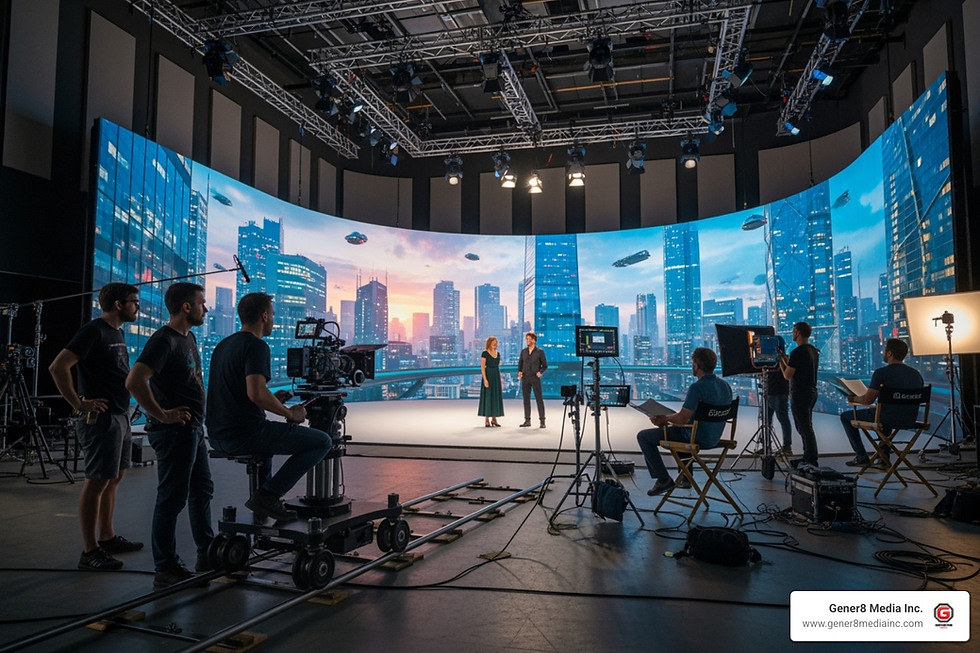
Virtual production: This cutting-edge technology allows us to create real-time virtual environments that blend with live-action footage, perfect for recreating historical settings or visualizing abstract concepts.
Advanced editing software: Powerful non-linear systems allow for complex cuts, intricate soundscapes, and seamless integration of different media.
Digital archives: We can now access vast collections of historical footage and documents from around the world, helping us tell richer stories.
3D animations: Our expertise in 3D Animations allows us to transform complex data or abstract ideas into immersive visualizations that captivate audiences.
Future Trends and Opportunities
The future of documentary filmmaking looks incredibly bright, with several key trends shaping the industry.
The docu-series boom: This multi-episode format allows for deeper character development and more thorough exploration of complex topics.
Interactive documentaries: These projects push boundaries by allowing viewers to choose storylines or access additional information, creating a personalized experience.
Branded documentary content: Companies are realizing that authentic storytelling connects with customers more effectively than traditional advertising.
Hybrid genres: The lines between documentary, drama, and other formats are blurring, opening up new creative approaches to storytelling.
Social media integration: Films are now designed with social platforms in mind, using them for promotion and to extend the narrative through audience conversation.
These trends are opportunities to innovate and find new ways to share the incredible diversity of human stories.
Frequently Asked Questions about Documentary Film Production
When we talk with potential clients and filmmakers, certain questions come up again and again. Here are the insights you need about working with a documentary film production company.
What are the essential elements of a successful documentary film production company?
A thriving company needs more than just good equipment. The key elements are:
A strong portfolio: A track record of impactful, well-produced films serves as your proof of concept.
Technical expertise: Access to professional equipment and a skilled crew is the backbone of quality production. At Gener8 Media Inc., our commitment to technology like virtual production and 3D Animations allows us to create immersive experiences.
Strong industry relationships: Connections with funders, distributors, and festival programmers open doors.
Business acumen: Understanding budgeting, legal requirements, and marketing ensures long-term sustainability.
A clear vision: Knowing your niche, style, and audience helps you attract the right projects.
A passion for storytelling: This dedication to sharing authentic stories is what drives everything else and creates films that resonate.
How has the role of the audience changed in the digital age?
The relationship between documentaries and audiences has been completely transformed. Viewers are no longer passive consumers but active participants.
They engage with content on social media, share clips, and discuss themes, extending a film's life. Crowdfunding has turned viewers into investors who are emotionally and financially committed to a project's success. Furthermore, streaming platforms have created an on-demand expectation, allowing niche documentaries to find their specific audiences globally. This means a documentary film production company must engage with its community throughout the entire process.
What is the first step in getting a documentary made?
The journey of every great documentary begins with developing a compelling and well-researched concept. A great idea isn't enough; it must be a thoroughly investigated story that deserves to be told.
Start by asking the hard questions: What is the central story? Why does it matter now? Who are the key characters? What unique perspective can you bring?
Once you have answers, compile your concept into a comprehensive pitch deck or treatment. This document should outline:
The central premise and narrative hook.
The key characters and their stories.
Your visual style and aesthetic approach.
The potential impact or message of your film.
Preliminary research findings to prove the story's viability.
This initial phase sets the foundation for everything that follows. Getting it right is crucial for success.
Conclusion
For a documentary film production company like ours, creating documentaries is a calling. We are driven by the belief that real-life stories have the power to change hearts, minds, and the world. Every project is an opportunity to shine a light on important truths and celebrate human resilience.
From the first spark of an idea to the final edit, we pour our creative dedication and technical skill into every frame. The documentary landscape has never been more exciting, with new technologies and platforms creating endless opportunities for authentic storytelling. At Gener8 Media Inc., we're not just keeping up with these changes—we're helping to shape them with our expertise in virtual production and 3D animation.
Whether you're a brand with a powerful story to tell or an organization with a mission to share, we are here to guide you through every step. Let's bring your story to the global screen it deserves.
Ready to tell your story? Start your documentary journey with us and let's create something extraordinary together.


Comments