
Making Magic: How TV Series and Short Films Come to Life
- lucas simmons
- Nov 30, 2025
- 14 min read

Why TV Series Production is More Complex Than You Think

TV series production is the multi-stage process of creating episodic content for television networks or streaming platforms. Here's what you need to know:
The 5 Main Stages of TV Series Production:
Development - Creating the concept, writing the pilot script, and pitching to networks
Pre-Production - Hiring crew, casting actors, scouting locations, and planning logistics
Production (Principal Photography) - Filming the episodes over 6-8 months
Post-Production - Editing, adding visual effects, sound design, and music
Distribution & Marketing - Delivering the finished product to networks or streaming platforms
In 2022 alone, 599 original scripted series were released across all platforms. That's more than 1.6 new shows premiering every single day.
But here's what most people don't realize: creating even a single episode involves hundreds of decisions, dozens of skilled professionals, and careful coordination across months of work. A typical broadcast network drama costs around $3 million per episode to produce, while premium cable shows can cost even more.
The process starts long before any cameras roll. Writers develop characters and storylines. Producers pitch concepts to network executives. Directors plan every shot. And the showrunner - television's equivalent of a captain - steers the entire ship from concept to final cut.
Whether you're working with a traditional network that demands 22 episodes per season or a streaming platform that prefers shorter 8-10 episode runs, understanding this production pipeline is essential. The good news? Once you grasp the fundamentals, the seemingly chaotic world of television production starts to make sense.

From Idea to Greenlight: The Development Stage
Every TV show you love started with someone staring at a blank page. Maybe they were daydreaming in a coffee shop, or scribbling ideas on a napkin. That spark of inspiration is just the beginning. Turning it into an actual series requires navigating one of the toughest stages of TV series production: development.
Here's what makes television different from movies. A film tells one complete story in two hours. A TV series needs to sustain dozens of hours across multiple seasons. That means we're not just creating characters – we're building an entire universe that can evolve and grow. The development stage is where this universe takes shape.
It starts with the concept. What's the show about? Who are these people? What world do they live in? Writers flesh out the theme, genre, and most importantly, the character arcs that will keep viewers coming back week after week.
Once the concept feels solid, it's time to write the teleplay – a script formatted specifically for television. This is usually the pilot episode, and it carries enormous weight. The pilot introduces your world, hooks the audience, and proves the concept can work.
Smart producers also create a Show Bible. Think of it as the owner's manual for your series. It contains detailed character descriptions, potential locations, major story arcs, and sometimes even episode breakdowns for future seasons. When you're asking someone to invest millions of dollars, you need to show them you've thought this through.
Then comes the hard part: pitching. You're sitting across from network executives or streaming platform decision-makers, trying to convince them your show deserves to exist. As industry insiders will tell you, getting a first-timer's idea greenlit is incredibly difficult.
Most successful pitches involve an established producer who has existing relationships and credibility. The process of creating a TV show often requires more than just a great idea – it takes detailed planning, character development, and a comprehensive vision for at least the first season.
This stage also involves attaching talent early. Landing a recognizable actor or respected director can make your pitch significantly more appealing. It's part art, part strategy, and entirely nerve-wracking. For those exploring different aspects of storytelling and production, more info about film services can provide valuable context on how these principles apply across various mediums.
The Crucial Role of the Pilot Episode
The pilot episode isn't just your first episode. It's your audition, your proof-of-concept, and your most expensive calling card all rolled into one.
When a network or streaming service greenlights a pilot, they're making a serious investment. The two-hour pilot for Lost cost between $10 and $14 million. Boardwalk Empire's first episode ran $18 million. That's feature film money for a single episode.
So what makes a pilot worth that investment? It needs to prove the concept works. It introduces the world and all major characters while giving viewers a taste of what the series will become. If people connect with what they see, the network issues a series order – the golden ticket that transforms your pilot into a full season.
Casting attachment plays a huge role here. Getting a well-known actor attached to your pilot dramatically increases its chances of success. Networks know that recognizable faces help launch new shows. The pilot gives them something concrete to evaluate, rather than just imagining what could be.
Without a successful pilot, even the most brilliant idea might never reach audiences. You can learn more about what is a pilot episode and why it matters so much to the entire production process.
The Showrunner: Captain of the Ship
If TV series production were an ocean voyage, the showrunner would be the captain. This person steers everything from the initial concept through final delivery.
The showrunner wears multiple hats. They're the head writer, crafting and approving every script. They're an executive producer, making business decisions and managing budgets. Most importantly, they hold final creative authority over the series. When there's a disagreement about story direction, casting, or editing choices, the showrunner makes the call.
Their responsibilities touch every aspect of production. They run the writers' room, guide character development, and ensure consistency across all episodes. They're involved in casting decisions and often direct episodes themselves. They're in the editing bay, the sound mix, and the color grading sessions. Overseeing production from this 30,000-foot view requires creative genius, leadership skills, and the ability to make dozens of critical decisions every single day.
The showrunner's creative vision becomes the show's DNA. They set the tone, shape the direction, and ultimately determine whether the series succeeds or fails. It's one of the most demanding jobs in television – and one of the most influential.
The Three Core Phases of TV Series Production
Once your series gets the greenlight, the real adventure begins. Think of it as building a house – you can't just start hammering nails and hope for the best. You need blueprints, materials, skilled workers, and a clear plan. TV series production follows the same principle, moving through three distinct phases that transform scripts into the shows we love.
These three phases – pre-production, production (or principal photography), and post-production – each have their own rhythm and requirements. They're interconnected, like chapters in a book, with each one building on the work that came before.
Here's something interesting: not all shows follow the same timeline or approach. The production style depends heavily on the format. A multi-camera sitcom like The Big Bang Theory shoots quickly, often in front of a live studio audience, with multiple cameras capturing different angles simultaneously. It's efficient and cost-effective, which is why these shows can produce episodes faster.
Single-camera shows – whether they're sitcoms like The Office or dramas like Grey's Anatomy – take a different path. They shoot with one camera, requiring multiple takes from different angles to create that cinematic feel we've come to expect. It's more time-intensive, but the visual result is worth it.
Regardless of format, a typical season takes 6 to 8 months to shoot. That's half a year of coordinated effort, bringing together hundreds of talented people working toward a single goal.

The Pre-Production Phase of TV Series Production
Before anyone yells "action," there's an enormous amount of groundwork to lay. Pre-production is where we transform creative ideas into practical plans. It's all about asking "how?" – how will we actually make this happen?
First comes hiring the crew. We're talking about assembling a small army of specialists. The unit production manager (UPM) oversees budgets and logistics, keeping everything on track financially. Assistant directors (ADs) manage schedules and coordinate on-set activities.
Then there are costume designers, cinematographers, set builders, prop masters, and dozens of other roles. Today's productions also prioritize diversity and inclusivity in crew selection, which not only promotes a healthier industry but also brings fresh perspectives that make shows more appealing to wider audiences.
Casting actors is where characters leap off the page. We're searching for performers who don't just look the part – they need to embody these characters, bringing authenticity and depth that makes audiences care. It's a delicate process of auditions, callbacks, and chemistry reads to ensure everyone works well together.
Location scouting takes us out into the world. Our location managers search for places that match the story's needs while also being practical to film in. That perfect coffee shop might look great, but if it's next to a fire station with sirens going off every ten minutes, it's not going to work. We need to balance aesthetic vision with real-world logistics.
Scheduling becomes a complex puzzle. We create detailed shooting schedules that account for actor availability, location access, crew shifts, weather conditions, and technical requirements. For a multi-episode series, this means coordinating hundreds of moving parts. One delay can create a domino effect, so precision matters.
The UPM works closely with everyone to manage the budget, track expenses, and allocate resources wisely. We always set aside contingency funds because surprises are inevitable. Maybe the weather turns unexpectedly, requiring indoor alternatives. Maybe a prop breaks and needs replacing. Good budgeting means being prepared for the unexpected.
Finally, there's set construction, wardrobe creation, and prop sourcing. We're building entire worlds from scratch. For productions that integrate animated elements or need specialized visual character development, expertise in areas like character animation becomes invaluable. Every detail matters, from the books on a character's shelf to the wear patterns on their favorite jacket.
Proper planning during pre-production isn't just helpful – it's essential. A well-organized pre-production phase prevents delays, keeps costs under control, and sets the entire production up for success.
The Production Phase (Principal Photography)
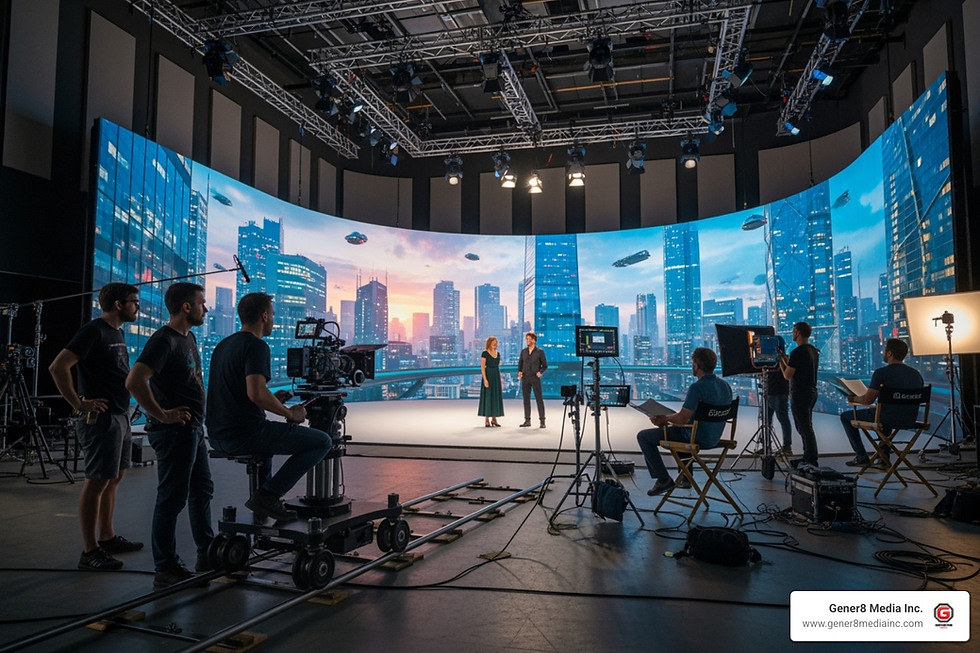
This is the moment everyone's been working toward. Lights, camera, action! The production phase is when we actually capture the footage that will become your favorite episodes. It's organized chaos at its finest, with dozens of professionals working in perfect harmony.
The director is the conductor of this orchestra, guiding actors' performances and translating words on a page into visual storytelling. They work closely with the Director of Photography (DP), who's responsible for how the show looks – the lighting, camera angles, shot composition, and overall visual aesthetic. Together, they create the show's visual language.
On set, the crew operates cameras, manages lighting rigs, handles sound recording, applies makeup, styles hair, and tracks continuity. Continuity is crucial – if a character has a coffee cup in their left hand in one shot, it needs to stay in their left hand when we cut to a different angle, even if we filmed those shots hours apart.
Larger productions often use a second unit. This separate team films additional material like establishing shots, action sequences, or scenes without principal actors. It's an efficiency strategy that allows the main unit to focus on the core dramatic moments while the second unit captures supporting footage.
Background actors bring life to every scene. They're the people in the restaurant, the pedestrians on the street, the crowd at the concert. Stand-ins work during rehearsals, helping the director and camera crew block out movements and set up lighting, which saves valuable time for the principal cast.
Photo doubles match a principal actor's appearance for certain shots, and hand doubles might be called in for specialized tasks like playing a musical instrument or performing intricate close-up work.
Filming a season typically takes 6 to 8 months. It's a marathon that demands stamina, focus, and dedication from everyone involved. Some days are exhilarating, some are exhausting, but each one brings the story closer to completion.
The Post-Production Phase of TV Series Production
When filming wraps, many people think the work is done. But post-production is where raw footage transforms into polished television. It's meticulous, creative, and absolutely essential.
Editing comes first. Our editors work closely with the director and showrunner, piecing together scenes, establishing pacing, and crafting a narrative that flows naturally. They select the best takes, trim unnecessary moments, and ensure every scene serves the story. Sometimes they find that additional footage is needed, which means scheduling reshoots during this phase.
Visual effects (VFX) bring imagination to life. We transform green screens into fantastical worlds, add subtle improvements, or create entirely digital elements. The 2023 remake of The Little Mermaid required extensive CGI during post-production to create its underwater world. At Gener8 Media, our expertise in cutting-edge technology helps bring even the most ambitious concepts to reality.
Color grading adjusts the tone and mood of every frame. It's not just about making things look pretty – it's about visual storytelling. A warm, golden tone creates one feeling, while cool blues create something entirely different. Colorists ensure visual consistency across episodes while supporting the emotional arc of each scene.
Sound design creates an immersive auditory experience. Our sound designers add ambient noises, special effects, and foley – those everyday sounds like footsteps, rustling clothes, or clinking glasses. There's even a technique called "walla" for crowd scenes, where background actors record improvised conversations to create authentic-sounding crowd chatter.
The term comes from early radio days when actors would literally repeat "walla, walla, walla" to simulate crowd noise. You can learn more about this crucial craft through sound design and mixing.
The mixing process balances dialogue, music, and sound effects into a cohesive whole. Every element needs to be heard clearly while supporting the story. For more details on this essential aspect, explore our sound design production capabilities.
Finally, original music scoring adds emotional depth. Composers create themes that become synonymous with the show itself, enhancing moments and reinforcing the series' identity.
Post-production is where good footage becomes great television. It's a delicate art that requires patience, skill, and an eye for detail – changing raw material into the polished episodes that audiences will remember.
The Business of Television: Budgets, Formats, and Distribution
Creating great television is an art. Funding it, distributing it, and making it profitable? That's a whole different challenge. Behind every captivating story on screen lies a complex financial and logistical framework that determines everything from how much we can spend on special effects to where audiences will actually watch the finished product.
Let's talk about money first. Historically, commercial networks have relied on advertising revenue to fund their operations. This means that audience size and demographics aren't just interesting statistics – they're the lifeblood of the business.
Advertisers are particularly interested in the 18-49 age demographic because this group watches less traditional television and is harder to reach through conventional means. That scarcity makes them more valuable. For decades, Nielsen ratings have been the ultimate arbiter of a show's fate: good ratings keep a show alive, while bad ratings usually lead to cancellation, often within a single season.
The financial model in the US often involves something called deficit financing. Here's how it works: studios finance the production costs upfront, while networks pay a license fee that typically doesn't cover the full expense of making the show.
The studio then hopes to recoup its investment and turn a profit through syndication (selling rerun rights to other networks or platforms) and home video sales. This is why you'll often hear that a show needs a minimum of 100 episodes for broadcast syndication – that's the magic number where the real money starts flowing.

Today's marketing and distribution strategies are more diverse than ever before. We're no longer limited to a few primetime slots on major networks. Instead, we employ a dynamic mix of traditional publicity, social media campaigns, digital advertising, and strategic partnerships to reach our target audience wherever they are. For a show to succeed in this crowded landscape, it needs not just a great story but also a smart business plan to fund it and get it seen by the right people.
For those interested in how these principles apply to non-fiction storytelling, exploring More info about documentary production offers valuable insights into a different but equally fascinating corner of the television world.
How TV Series Budgets are Managed
Managing budgets in TV series production is like walking a tightrope while juggling flaming torches. It's a constant balancing act between creative ambition and financial reality.
Episode costs vary dramatically depending on the network, platform, genre, and star power involved. In the US, the average broadcast network drama costs around $3 million per episode to produce. Cable dramas typically average $2 million per episode.
But high-end streaming or premium cable shows? They can easily exceed $10 million per episode, especially when they involve extensive visual effects, elaborate sets, or A-list talent.
Pilot costs deserve special mention because they're often the most expensive episodes you'll ever make. A pilot needs to hook both audiences and executives, proving that your concept is worth investing in for multiple seasons. We mentioned earlier that Lost's two-hour pilot cost between $10 and $14 million, while Boardwalk Empire's first episode ran $18 million. Those aren't typos – pilots really do cost that much when you're trying to create something spectacular.
These substantial costs are covered through a combination of network licensing fees, studio investments, and increasingly, direct funding from streaming platforms. As we discussed, deficit financing is common, with studios taking on initial losses in hopes of future profits from syndication or international sales. For a deeper dive into the economics of television production, the Average cost of a TV episode provides additional context on how these numbers have evolved over time.
Effective budget management isn't just about cutting costs or finding the cheapest options. It's about strategically allocating resources to maximize production value and deliver a compelling show within financial constraints. Sometimes that means spending more on a key location and less on extras. Other times it means investing heavily in post-production to achieve effects that would be impossible to capture on set.
TV Formats and Running Times
The world of television offers a fascinating array of formats and running times, each with its own production implications and audience expectations. Understanding these differences is crucial for anyone working in TV series production.
A miniseries is a self-contained story told over a limited number of episodes, typically between two and six. These productions have a definite ending planned from the start and don't leave room for continuation. Think of them as extended movies broken into convenient viewing chunks.
A limited series is similar but usually runs longer – often between six and twelve episodes. Like a miniseries, it tells a complete story with a planned conclusion. The key difference? Limited series tend to have higher production values and more complex narratives that need the extra runtime to unfold properly.
The distinction between these two formats has become somewhat blurred in recent years, which is why you'll sometimes see the terms used interchangeably. For clarity on this evolving terminology, The difference between miniseries and limited series offers helpful context.
An ongoing series, on the other hand, is designed to continue indefinitely. These shows have open-ended storylines that can evolve over multiple seasons, with no predetermined endpoint. Traditional network dramas and sitcoms fall into this category, though even these are increasingly adopting shorter seasonal runs.
Episode length variations also play a significant role in how we approach production. Traditional network shows run about 42 minutes for dramas (to fit into a one-hour slot with commercials) and 22 minutes for sitcoms (for a half-hour slot). Cable and streaming platforms offer more flexibility, with episodes ranging anywhere from 30 minutes to over an hour, depending on the story's needs.
The US vs. UK vs. Canadian models differ significantly too. American television traditionally favored long seasons of 20-24 episodes, though this is changing. British television often produces shorter series of 6-8 episodes, allowing for tighter storytelling and higher per-episode budgets.
Canadian productions typically fall somewhere in between, often producing 10-13 episodes per season. Each model has its advantages, and we're seeing more convergence as streaming platforms adopt the shorter-season approach globally.
For those fascinated by the documentary format specifically, More info about true crime documentaries explores how these principles apply to one of television's most popular non-fiction genres.
The Impact of Streaming Platforms
Streaming platforms have fundamentally transformed how we think about television production and distribution. The changes go far beyond just where people watch their shows.
The binge-watching model has revolutionized storytelling. When Netflix releases an entire season at once, writers can craft narratives that reward continuous viewing rather than designing each episode to stand alone. Cliffhangers work differently. Pacing changes. We can be more subtle with our storytelling because we know viewers won't have to wait a week to remember what happened in the previous episode.
Global distribution has become instantaneous. A show released on a major streaming platform is available worldwide on the same day, eliminating the traditional staggered international release schedule. This changes everything from marketing strategies to how we think about cultural references and localization.
Creative freedom has expanded in remarkable ways. Without the constraints of commercial breaks, episodes can run as long or as short as the story demands. Content restrictions have loosened significantly on many platforms, allowing creators to tackle mature themes and complex narratives that might have been impossible on traditional networks.
Data-driven decisions now inform every aspect of production. Streaming platforms have access to incredibly detailed viewer data – what people watch, when they watch it, where they pause, when they stop watching entirely. This information influences everything from which shows get greenlit to how marketing budgets are allocated.
Split seasons have become increasingly common, where a single season is released in two parts, months apart. This approach helps maintain subscriber engagement over longer periods while giving production teams more time to complete episodes.
The shift to streaming hasn't eliminated traditional television, but it has forced everyone to adapt. For a broader perspective on the viewing landscape, The many ways to watch television explores the full range of options available to today's audiences.


Comments