
The Animated Truth: A Deep Dive into Motion Graphics

What Is Motion Graphics Animation? Understanding Visual Storytelling

Motion graphics animation is a digital design discipline that brings graphic elements like text and shapes to life through movement. It's a powerful visual medium defined by several key traits.
Key Characteristics:
Animated graphic design - Text, shapes, and other visual elements are set in motion.
Information-focused - The primary goal is to communicate ideas, not tell character-driven stories.
Multimedia integration - It is usually combined with audio for a complete experience.
Versatile applications - It's used across film, advertising, social media, and corporate communications.
Primary Purposes:
Illustrate complex ideas
Add excitement to storytelling
Convey messages with dynamic visuals
Transform static content into engaging experiences
While its roots are in Hollywood's golden age, the digital revolution made motion graphics accessible to a wide audience of creators. Today, these animated visuals power everything from Netflix opening credits to social media content, helping brands connect with audiences in ways static images cannot.
Unlike traditional animation, which focuses on narrative, motion graphics emphasizes communicating information through abstract visual elements. Whether it's an explainer video or animated typography, motion graphics makes the invisible visible.
What Are Motion Graphics? The Art of Movement
Motion graphics animation is essentially graphic design that moves. It's the process of taking static elements like text, shapes, and images and animating them. Unlike feature-length animated films, motion graphics are typically shorter pieces designed to communicate specific ideas or improve storytelling.
Their versatility comes from visual flexibility. They can be 2D or 3D, ranging from hyper-realistic to abstract. You might see minimalist animations explaining business concepts or vibrant visuals that capture attention on social media.
The power of motion graphics lies in making the complex simple. They transform static designs into dynamic experiences that grab attention and are memorable. Whether for a 30-second commercial or a scroll-stopping Instagram story, motion graphics animation delivers messages in ways static images can't.
Motion Graphics vs. Traditional Animation
While both involve animating visuals, their purposes differ. Understanding this distinction explains why motion graphics are so essential today.
Feature | Motion Graphics | Traditional Animation |
Primary Goal | Communicate information, explain concepts | Tell narrative stories, develop characters |
Focus | Abstract concepts, data, text, shapes, logos | Characters, plots, emotional arcs |
Visual Style | Often minimalist, abstract, graphic-centric | Character-driven, illustrative, often more detailed |
Pacing | Can be very fast, direct, concise | Varies, but often allows for slower, character-driven moments |
Key Elements | Typography, icons, charts, transitions | Character design, scene blocking, emotional expressions |
Applications | Explainer videos, infographics, UI animation, ads | Feature films, TV series, narrative shorts |
Traditional animation focuses on storytelling through characters, like in classic Disney films where movement creates believable, emotional characters and develops narrative arcs.
Motion graphics excel at information design. They are perfect for animated logos, explainer videos that break down complex processes, or data visualizations that make statistics compelling. They can transform an abstract concept, like software integration, into clear, interconnected visuals.
The Core Elements of Motion Graphics
Effective motion graphics animation combines several key elements.
Typography: Text moves, scales, and transforms to emphasize key points and guide the viewer.
Shapes and Color: Geometric forms can represent complex ideas, while color choices set the mood and reinforce brand identity.
Movement and Pacing: The speed and easing of animation create a natural and engaging feel. Quick movements convey excitement, while slower pacing can suggest sophistication.
Sound Design: Sound effects, music, and voiceovers improve the message and create emotional connections.
Texture and Layering: These add depth and visual interest, giving a project a handcrafted feel or communicating modern precision.
At Gener8 Media, we balance these elements to create motion graphics that achieve specific client goals, from explaining concepts to building brand awareness.
From Celluloid to Pixels: A Brief History of Motion Graphics
The story of motion graphics animation is one of artistic evolution, from early experimental films to today's digital productions. Before computers, pioneers explored how movement could transform static visuals.
In the 1920s, filmmakers experimented with "visual music"—abstract films without traditional narratives. These early works were expensive and time-consuming, limiting them to major Hollywood productions.

A breakthrough came during Hollywood's post-war golden age when designers turned movie credits into art. Animated title sequences began setting the mood, making the opening an essential part of the film experience. You can learn more from The History of Motion Graphics.
The Pioneers of a New Art Form
Creative trailblazers invented a new language of visual communication.
Saul Bass and Elaine Bass revolutionized film titles in the 1950s and 60s. Their iconic work on Hitchcock's "Vertigo" and "Psycho" used bold graphics and timed animation to capture each film's psychological essence, turning a list of names into an art form.
Pablo Ferro brought a distinctive, hand-drawn, rapid-cut style to films like "Dr. Strangelove," proving opening sequences could be as thrilling as the movies themselves.
Early pioneers like Walther Ruttmann ("Lichtspiel: Opus I," 1921) and Stan Brakhage (non-narrative, hand-painted films) explored abstract visual music and textural qualities that influence motion graphics today.
These pioneers understood that moving visuals could communicate ideas and emotions in ways static images could not.
The Digital Age and Its Impact
The late 20th century brought a revolution. Before digital technology, creating motion graphics was incredibly difficult and expensive.
The game-changers were accessible software, desktop computing power, and lower production costs. What once required Hollywood budgets could now be created by anyone with a computer. The Apple Mac and software like Adobe After Effects democratized the field.
The rise of the internet and social media created an explosion in demand for dynamic content. Motion graphics became essential for everything from social media posts to digital advertising and sophisticated broadcast design.
Today, motion graphics animation is in every corner of media, from Netflix credits to corporate training videos. What started as Hollywood magic is now an essential communication tool.
At Gener8 Media, we use this digital revolution and cutting-edge technology to create compelling visual stories for our clients.
The Modern Motion Graphics Animation Landscape
Today, motion graphics animation is everywhere, from Netflix shows to Instagram ads. It has become the visual language of our digital age, grabbing attention in a world of constant scrolling. Motion graphics bridge the gap between information and entertainment, making complex topics engaging.
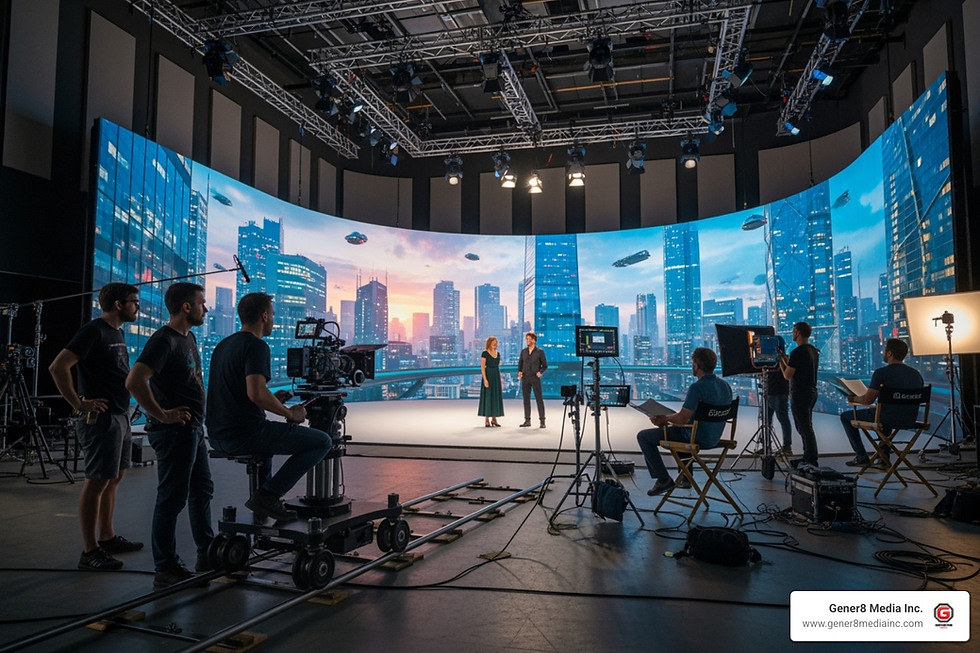
At Gener8 Media, we see how motion graphics animation transforms ideas into immersive experiences. Whether explaining quantum physics for a documentary or showcasing a tech innovation, motion graphics help us connect with audiences. Our work with technologies like virtual production and 3D animations pushes creative boundaries.
Enhancing Film and Television
Stunning opening credits in film and TV are carefully crafted experiences that pull viewers into the story. The iconic sequence from "Game of Thrones" is a prime example.
Its intricate 3D map made viewers feel like they were soaring over Westeros, building excitement before the episode began. You can see it here: Game of Thrones opening credits.

Motion graphics also work behind the scenes in lower-thirds on news broadcasts, scene transitions, and animated sports statistics. Modern streaming platforms have turned title sequences into an art form, with each series aiming for more creative and immersive openings.
Revolutionizing Advertising and Marketing
Motion graphics animation has transformed how brands communicate. Explainer videos have become a marketing staple, simplifying app functions or making abstract concepts like cloud computing understandable and exciting.
Social media is a playground for motion graphics. Eye-catching animated logos, dynamic text on Instagram stories, and satisfying product demonstrations are all designed to stop scrolling and engage viewers.
Digital billboards have brought motion graphics into the physical world, turning city centers into dynamic displays. The power of motion graphics in advertising is its ability to make complex products feel simple and boring services feel exciting.
Making Complex Information Digestible
This is where motion graphics animation truly shines: turning the complicated into the crystal clear. In an age of information overload, motion graphics act as a translator for dense data and complex processes.
Data visualization brings numbers to life, changing static charts into dynamic, flowing stories that are easier to understand.
Animated infographics have revolutionized education and training. Complex scientific processes or historical events become engaging narratives when animated.
Corporate training is now more engaging with interactive, animated content instead of static slide presentations.
At Gener8 Media, we use these techniques in our documentary productions and films to create "aha!" moments for audiences. Motion graphics make the invisible visible, turning abstract concepts like AI or economic systems into tangible, understandable visuals.
Your Guide to Creating Motion Graphics
Ready to dive into motion graphics animation? Creating compelling motion graphics requires patience, practice, and the right tools. The journey starts with a solid foundation in design fundamentals like composition, color theory, and typography. Understanding the 12 principles of animation will also help make your work feel more natural and engaging.

Essential Software and Tools
Certain software programs are the industry standard for professional motion graphics animation.
Adobe After Effects: This powerhouse software is where most motion graphics are created. It allows you to animate layers, add effects, and bring text to life. Adobe offers great resources for learning the Basic tools of After Effects, how to Create and animate text, and the Basics of keyframe animation.
Adobe Premiere Pro: This video editor works alongside After Effects for assembling footage, syncing sound, and polishing the final edit.
Cinema 4D and Blender: For 3D animation, Cinema 4D is a professional-grade tool, while Blender is a powerful free, open-source alternative.
Figma: Primarily a UI/UX tool, its prototyping features are useful for creating simple UI animations.
Fundamental Techniques for Motion Graphics Animation
Mastering several key techniques is essential for creating smooth, professional animations.
Keyframing: This is the backbone of animation, where you set an object's properties (position, size, etc.) at specific points in time. The software then generates the movement in between.
Tweening: Short for "in-betweening," this is the process where the software creates the frames between your keyframes for smooth motion.
Easing: This makes movement feel natural by allowing objects to accelerate and decelerate, avoiding a robotic look.
Timing and Pacing: These control the rhythm of your animation. Good timing delivers your message with impact, while proper pacing keeps viewers engaged.
Composition and Layering: Composition guides the viewer's eye, while layering allows for complex animations with multiple elements moving in coordination.
Alpha Channel: This transparency feature lets you overlay graphics on video footage seamlessly, which is essential for professional work.
Finding Assets and Inspiration
You don't have to create everything from scratch. The motion graphics community is rich with resources.
Templates: Sites like Envato Elements and Jitter offer vast libraries of templates to jumpstart projects and teach you new techniques.
Stock Assets: LottieFiles offers a huge collection of free, lightweight motion graphics animation in multiple formats (Lottie JSON, dotLottie, MP4, GIF), perfect for UI. They also provide tools, plugins, a developer portal, and open-source contributions on GitHub.
Tutorials and Communities: YouTube channels like Learn with Envato Tuts+ and resource lists like Creative Boom's 50 motion design resources that creatives actually use are invaluable. Forums like the LottieFiles forum are great for feedback and support.
Every expert was once a beginner. Start experimenting, accept the learning curve, and don't be afraid of mistakes.
Frequently Asked Questions about Motion Graphics
Here are answers to some of the most common questions we hear about motion graphics animation.
What does a motion graphics designer do?
A motion graphics designer is a visual storyteller who animates static designs. They bridge graphic design and animation, making elements like text, logos, and shapes move with purpose. Their work is varied, including creating animated logos, explainer videos, title sequences, and UI animations.
They combine technical skills in software like Adobe After Effects with creative fundamentals like typography and color theory to transform abstract ideas into compelling, clear visual experiences.
How is motion graphics different from VFX?
The main difference is purpose. Motion graphics animation focuses on animating designed elements (text, shapes, logos) to communicate information or improve branding. Visual Effects (VFX), on the other hand, integrates computer-generated imagery (CGI) with live-action footage to create realistic scenes that would be impossible to film otherwise, like adding a dragon to a landscape.
Motion graphics is design-driven, while VFX is focused on photorealism and seamless integration with reality. However, the fields can overlap, as motion graphics are often used for on-screen displays within VFX shots.
Can I learn motion graphics on my own?
Yes, many talented motion designers are self-taught. The digital age provides abundant resources for learning motion graphics animation. The key is to build a strong foundation.
Start with Software: Master the industry standard, Adobe After Effects. Countless free tutorials are available, including Adobe's own guides.
Learn Design Fundamentals: Software skills are not enough. Study typography, color theory, and composition to lift your work.
Practice Consistently: Start with simple projects to build your skills incrementally. Each project is a learning opportunity.
Build a Portfolio: Document your progress and showcase your best work to demonstrate your abilities.
Connect with the Community: Use online forums and social media to get feedback, find inspiration, and solve problems. The motion graphics community is very supportive.
With dedication and practice, learning motion graphics on your own is absolutely achievable.
Conclusion: Bringing Your Vision to Life with Animation
Motion graphics animation is more than just moving images; it's a powerful way to breathe life into ideas in our visual-first world. From its origins in film title sequences to its dominance in social media today, motion graphics has become a universal language for grabbing attention, simplifying complexity, and telling memorable stories.
Its unique power lies in marrying design and movement to make abstract concepts tangible and engaging. The democratization of animation software has opened the door for creators everywhere to tell compelling visual stories without needing a Hollywood budget.
At Gener8 Media, we use motion graphics animation as a key tool to cut through the noise, connect with audiences, and make complex information digestible. The future of this field is bright, with endless possibilities in emerging technologies like virtual reality.
At its core, motion graphics animation is a powerful tool for storytelling, capable of changing complex data and abstract concepts into compelling narratives, a technique we frequently use to lift our documentary productions.
Whether you're a creator starting your journey or a brand looking to improve your message, the tools and community are ready to help you bring your vision to life.


Comments