
Unlocking Your Story: The Journey of Feature Film Development

Why Feature Film Development is the Make-or-Break Phase

Feature film development is where a movie idea is born, nurtured, and shaped into a viable project. It's a high-stakes process where a creative spark is transformed into a blueprint for production. The numbers tell the story:
70% of feature films that enter development never get made.
The average development phase takes 3 years to complete.
Independent films average $10 million in budget, while studio films average $65 million.
The global box office for feature films reached $32 billion in 2023.
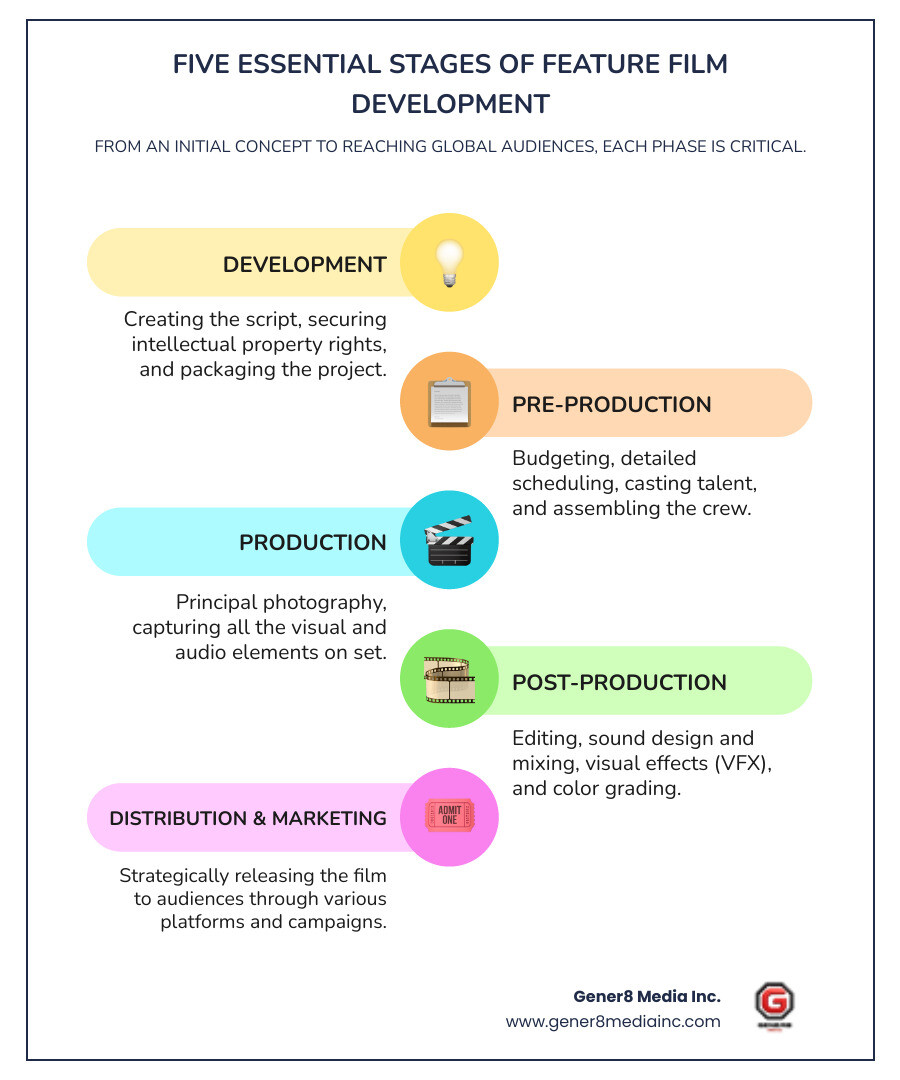
Feature film production is generally broken down into five key stages:
Development: Creating the script, securing rights, and packaging the project.
Pre-Production: Budgeting, scheduling, casting, and hiring crew.
Production: The actual filming of the movie.
Post-Production: Editing, sound design, visual effects, and color grading.
Distribution & Marketing: Getting the film to audiences.
As producer Carol Baum notes, most projects fail when teams "lose sight of the original spark that made the project appealing in the first place." Understanding each stage is crucial for navigating the complex journey from concept to cinema.
Stage 1: The Genesis of Feature Film Development
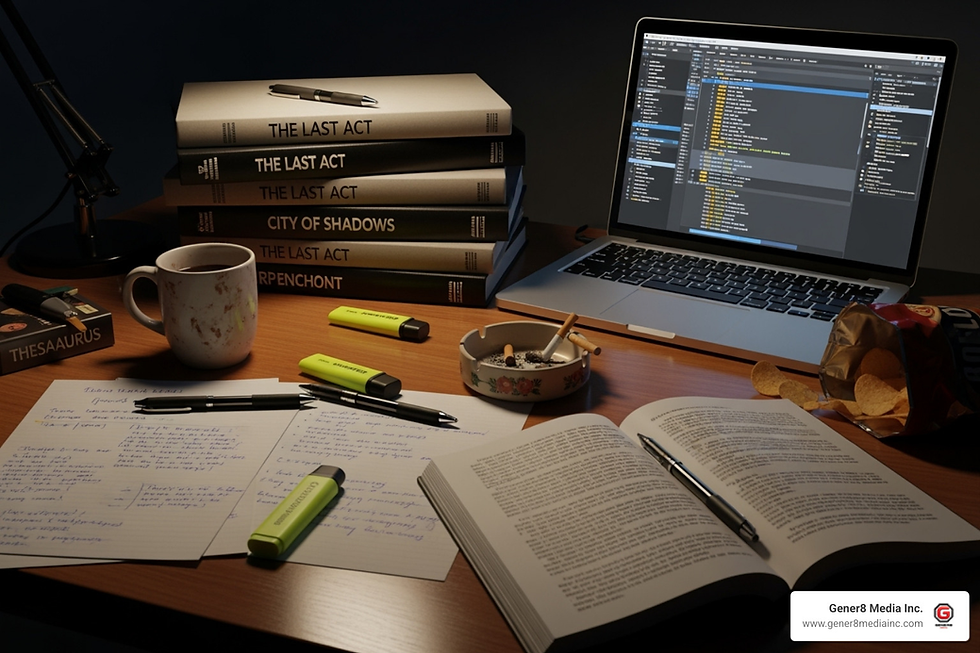
Every film begins with an idea, but changing that spark into a producible project is the core of development. This stage involves crafting a compelling story with a clear target audience in mind. The screenplay is the foundation, often going through numerous drafts to perfect its structure, characters, and dialogue. The film Spooks, for example, famously went through 25 drafts.
Once the script is solid, the producer's role becomes central. They champion the project, working to secure the intellectual property (IP) rights, which is a critical legal step to ensure a clean "chain of title." This is followed by "packaging" the project—attaching a director and key cast members to increase its appeal to investors. The producer then creates a pitch package, including the script, a synopsis, a lookbook for visual style, and a preliminary budget, to attract financing. Throughout this, they oversee the writer, ensuring the script remains both creatively strong and commercially viable.
Navigating the legal landscape is non-negotiable. This includes securing option agreements for source material, understanding copyright law, and preparing for future needs like talent releases and crew contracts. Many productions form a Limited Liability Company (LLC) to protect the filmmakers. Consulting with an Entertainment Attorney is essential to ensure all legal aspects are handled correctly from the start.
Stage 2: The Blueprint for Production

With a script and key talent attached, the project moves into pre-production, where the creative vision is translated into a concrete plan. This begins with a detailed script breakdown, identifying every element needed for the shoot—from actors and locations to props and special effects. This breakdown is the foundation for the film's budget and schedule.
Budgeting and Financing
A film's budget is its financial roadmap. It's divided into:
Above-the-Line Costs: Salaries for the writer, director, producer, and principal cast.
Below-the-Line Costs: All other production expenses, including crew, equipment, locations, and post-production.
For independent films, securing financing is a creative puzzle. Common strategies include seeking private equity, leveraging state and international tax credits, pre-selling distribution rights, and crowdfunding. A diversified approach is often the most successful. For more information on how we help steer these complex financial landscapes, check out our film services.
Assembling the Team and Plan
Simultaneously, the producer and director assemble the crew, starting with key department heads like the Director of Photography and Production Designer. Location scouting is also a critical step, balancing artistic needs with logistical and budgetary constraints.
Finally, a detailed shooting schedule is created, organizing the entire filming process. This complex document, often managed by the Line Producer, must account for actor availability, location moves, and other variables to ensure the production stays on time and within budget. You can see a Sample Budget and a Sample Shooting Schedule to understand their complexity.
Stage 3: From Page to Screen - Production & Post-Production

This is where the vision from feature film development becomes a reality. During production (principal photography), the producer's role shifts to oversight, ensuring the project stays on schedule and within budget while maintaining its creative integrity. They are the ultimate problem-solvers, managing everything from logistical challenges to on-set safety.
Once filming is complete, the project moves into post-production, where the raw footage is transformed into a polished film. This collaborative process includes:
Editing: The editor and director assemble the footage, shaping the narrative, pacing, and emotional arc until they achieve "picture lock."
Sound Design & Mixing: The audio landscape is created, from dialogue and sound effects to the musical score, all balanced to create an immersive experience.
Color Grading: The visual tone and mood of the film are finalized by adjusting color and contrast, ensuring a consistent and impactful look.
Visual Effects (VFX): Digital artists create or improve imagery that would be impossible or too costly to film practically. At Gener8 Media, we use cutting-edge technology like virtual production and 3D animation to bring imaginative worlds to life. Explore our 3D Animations to see how we turn ambitious visions into stunning realities.
Stage 4: Reaching Your Audience
After the final cut is complete, the focus shifts to connecting the film with its audience. This involves a combination of smart distribution strategies and effective marketing.
Distribution and Marketing
The path to the audience has many routes. A theatrical release, whether wide or limited, still holds prestige. However, streaming platforms like Netflix (SVOD) and Apple TV (TVOD) offer massive, direct-to-consumer reach. Many independent films find success through a hybrid model, starting with a festival run to generate buzz and attract distributors.
Film festivals like Sundance, Cannes, and Toronto are crucial for independent films. They provide a platform for premieres, critical reviews, and invaluable networking opportunities with sales agents and distributors who can secure deals for theatrical, streaming, and international rights.
Building a Buzz
A strong marketing campaign is essential. This includes:
Public Relations: Securing media coverage, reviews, and interviews.
Digital Marketing: Using social media to build a community and engage directly with fans.
Promotional Materials: Creating compelling trailers and posters that capture the film's essence.
Events: Hosting premieres and Q&A sessions to generate excitement and word-of-mouth.
At Gener8 Media, we understand how to craft compelling narratives across all platforms. Our expertise extends beyond feature films to all forms of storytelling, including documentaries. More info about our documentary work.
Stage 5: Accelerating Your Career in Film
For aspiring filmmakers, breaking into feature film development can be accelerated through specialized programs and labs. These opportunities provide mentorship from industry veterans, invaluable networking connections, and intensive skill development in areas like script analysis, pitching, and budgeting. Being selected for a reputable program also lends credibility to your project and opens doors to funding and talent.
Comparing Film Development Programs
When considering which program might be the best fit, it's helpful to compare their focus, cost, and structure.
Program/Institution | Focus | Cost | Duration | Eligibility |
Sundance Institute | Independent filmmaking, diverse voices | Varies (many are free) | 5-day intensives to year-long support | Project-based, global |
NYFA Programs | Hands-on producing skills | $15,000-$50,000+ | 1-year programs, workshops | Open enrollment, portfolio review |
UCLA Extension | Academic approach, structured learning | $500-$3,000 per course | Individual courses, certificates | Open enrollment, some prerequisites |
Essential Skills for a Career in Feature Film Development
Success in this field requires a unique blend of creativity and business acumen. Key skills include:
Story Analysis: The ability to identify a compelling story and provide constructive feedback.
Communication & Pitching: Articulating a project's vision and potential to attract talent and investors.
Networking: Building and maintaining relationships across the industry.
Financial & Legal Acumen: Understanding budgeting, financing models, and contract basics.
Project Management: Juggling multiple projects and keeping them on track.
Resilience: Navigating the long and often challenging development process with persistence and diplomacy.
Frequently Asked Questions about Feature Film Development
What is a 'pitch package' and what does it include?
A pitch package is a collection of documents used to sell a film project to investors, talent, and distributors. It typically includes the script, a synopsis, a treatment, a lookbook (visual style guide), a preliminary budget, and bios for any attached key personnel.
How long does it take to get a feature film made?
The timeline varies greatly, but it's a marathon, not a sprint. The development phase alone can take 1-5 years. Including pre-production, filming, and post-production, the entire process from idea to finished film often takes 3-7 years or more.
What is the difference between an independent film and a studio film?
The main difference is financing and control. Studio films are funded and distributed by major studios (like Disney or Warner Bros.), which often means bigger budgets but less creative freedom for the filmmaker. Independent films are financed outside the studio system, giving filmmakers more control but requiring them to piece together funding from various sources like private investors, grants, and pre-sales.
Conclusion
The journey of feature film development is a marathon, demanding a unique mix of creative vision, business savvy, and unwavering resilience. From the initial spark of an idea to the final cut, every stage requires meticulous planning and execution. The producer acts as the central force, guiding the project through creative problems and financial complexities.
The most critical elements are a powerful script and a dedicated team. A strong story is the foundation, and a skilled producer is the architect who brings all the pieces together. It's a process of changing a vision into a tangible, marketable film that can captivate audiences.
At Gener8 Media, we thrive on these challenges. Our expertise in leveraging cutting-edge technology like virtual production and 3D animation allows us to help filmmakers push creative boundaries and turn ambitious ideas into immersive cinematic experiences. If you're ready to bring your story to life, we have the tools and the team to help you succeed.
Ready to bring your unique vision to the screen? Start your documentary production journey with us, and let's open up the full potential of your narrative together.
Stage 4: Reaching Your Audience
The journey of feature film development doesn't end when the final cut is approved. The next critical phase is ensuring your film reaches its audience through smart distribution choices and a focused, right-sized marketing campaign.
Distribution Strategies
Choosing the right mix can make all the difference:
Theatrical releases (wide or limited) build prestige and word-of-mouth.
Streaming platforms: SVOD (e.g., Netflix, Hulu) for reach; TVOD (e.g., Apple TV, Amazon) for rentals/purchases.
Home and ancillary markets (digital downloads, TV licensing, airlines, educational) add incremental revenue.
Many indies combine a festival premiere with a hybrid theatrical/streaming rollout.
Marketing Campaign Development
Start early and scale to your goals and budget:
Public relations: press releases, interviews, critic screenings.
Press kit: synopsis, bios, production notes, and high-res images.
Social media: behind-the-scenes content, targeted ads, fan engagement.
Trailers and teasers: short, compelling cuts that showcase tone.
Posters and key art: instantly communicate genre and mood.
Events: premieres and Q&As to spark buzz and media coverage.
At Gener8 Media, our storytelling expertise extends across formats. Learn more about our approach to non-fiction storytelling: More info about our documentary work.
Navigating Film Festivals and Distribution
Choose strategically: majors like Sundance, Cannes, and Toronto can attract press and buyers; niche festivals can be ideal for genre or audience alignment.
Network with sales agents and distributors; the right partner can maximize rights and market windows.
Arrive prepared with trailers, posters, and a press kit suitable for both festival use and platform storefronts.
Stage 5: Accelerating Your Career in Film
Breaking into feature film development gets faster with the right labs and programs. They offer mentorship, market-aware feedback, real networking, and validation that opens doors to talent, financing, and distribution.
The Sundance Institute Feature Film Program supports independent voices worldwide: Sundance Institute Feature Film Program. For hands-on producing, explore NYFA: NYFA. For structured coursework, see UCLA Extension: UCLA Extension.
Comparing Film Development Programs
Program/Institution | Focus | Cost | Duration | Eligibility |
Sundance Institute | Independent voices, creative labs | Varies (many free) | 5 days to year-long | Project-based, global |
NYFA Programs | Hands-on producing and pitching | $15,000-$50,000+ | Workshops to 1 year | Open enrollment, portfolio review |
UCLA Extension | Academic, structured development | $500-$3,000/course | Courses, certificates | Open enrollment, some prerequisites |
Essential Skills for a Career in Feature Film Development
Script analysis and story editing
Pitching and communication
Networking and relationship building
Budgeting basics and legal literacy
Project management and diplomacy
Resilience and market awareness
At Gener8 Media, we blend creative development with technical innovation—leveraging virtual production and 3D animation to help filmmakers push what's possible.
Frequently Asked Questions about Feature Film Development
What is a 'pitch package' and what does it include?
A pitch package is your project's first impression for investors, talent, and distributors. It typically includes the script, logline, synopsis, treatment, a lookbook (visual style), director/producer statements, team bios, a budget top-sheet, a financing plan, market comps, and any key talent attachments. Proof-of-concept materials (e.g., teaser or sample scene) can strengthen your case.
How long does it take to get a feature film made?
Expect a marathon: often 3 to 7 years from idea to release. Feature film development commonly averages around 3 years (1–5+), followed by 2–6 months of pre-production, several weeks to months of principal photography, and 6–12+ months of post.
What is the difference between an independent film and a studio film?
Studio films are financed and distributed by major studios, with average budgets around $65 million and greater executive oversight. Independent films are financed outside the studio system (private equity, grants, crowdfunding, pre-sales), often averaging around $10 million, and generally offer filmmakers more creative control.
Conclusion
The journey of feature film development demands creative clarity, business discipline, and stamina. A strong script and a producer who can align vision, financing, and execution remain the bedrock of every successful film.
At Gener8 Media, we help filmmakers move from spark to screen—pairing development savvy with tools like virtual production and 3D animation to realize ambitious ideas.
Ready to bring your unique vision to the screen? Start your documentary production journey with us.


Comments